This is an early to mid-19th century vernacular milking stool or low stool, most likely around 1800–1850, with a possible later 19th-century date if the underside shows more tool refinement than expected. The hand-hewn form, peg/knife marks, thick top, and simple joined construction are all consistent with rural handmade work rather than later machine-made furniture
• The broad, thick seat top and very simple shape point to practical farmhouse use rather than decorative furniture
• The legs and sides appear individually worked and irregular, which is typical of pre-industrial or early industrial vernacular making
This is an early to mid-19th century vernacular milking stool or low stool, most likely around 1800–1850, with a possible later 19th-century date if the underside shows more tool refinement than expected. The hand-hewn form, peg/knife marks, thick top, and simple joined construction are all consistent with rural handmade work rather than later machine-made furniture
• The broad, thick seat top and very simple shape point to practical farmhouse use rather than decorative furniture
• The legs and sides appear individually worked and irregular, which is typical of pre-industrial or early industrial vernacular making


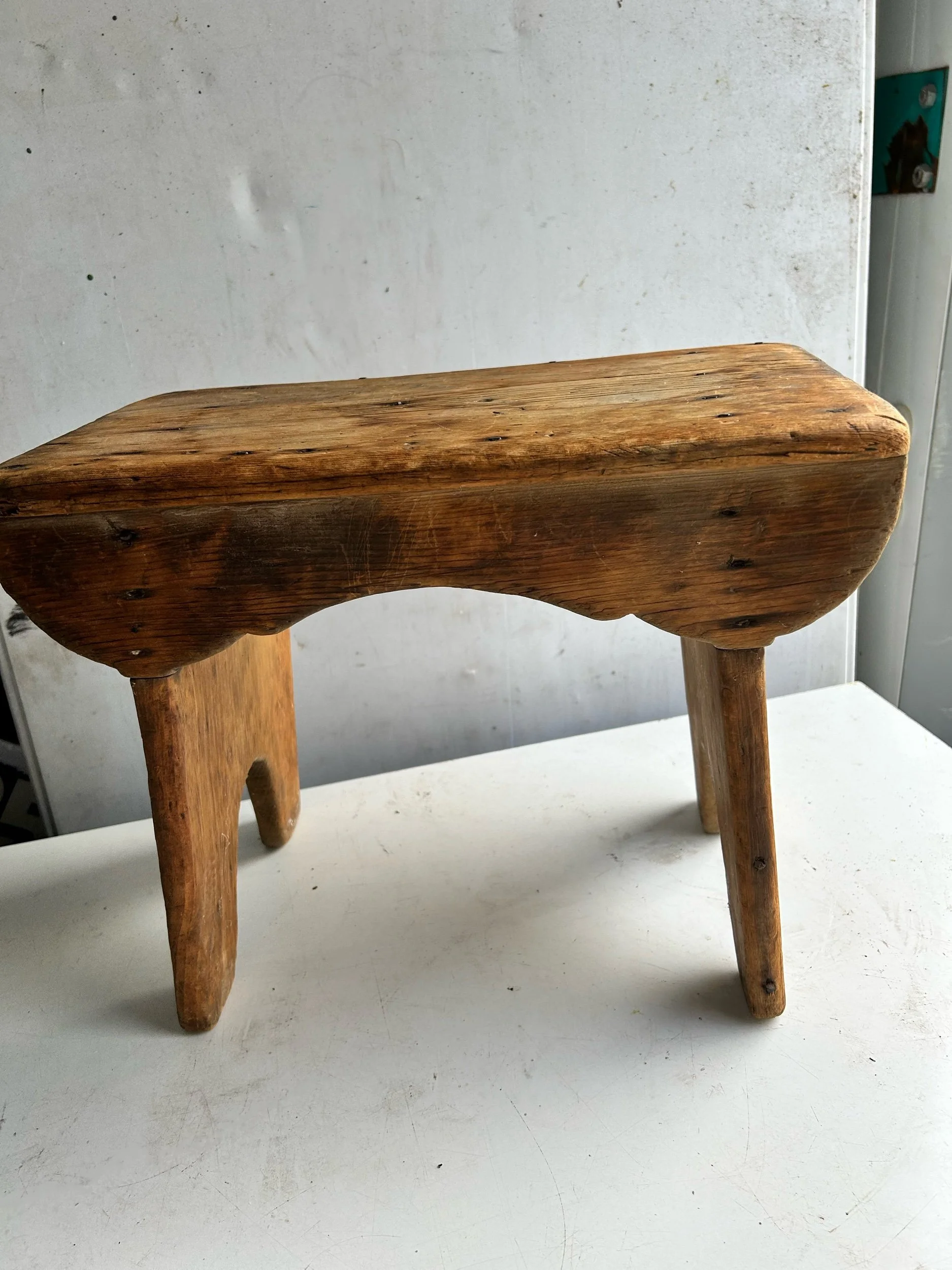 Image 1 of 6
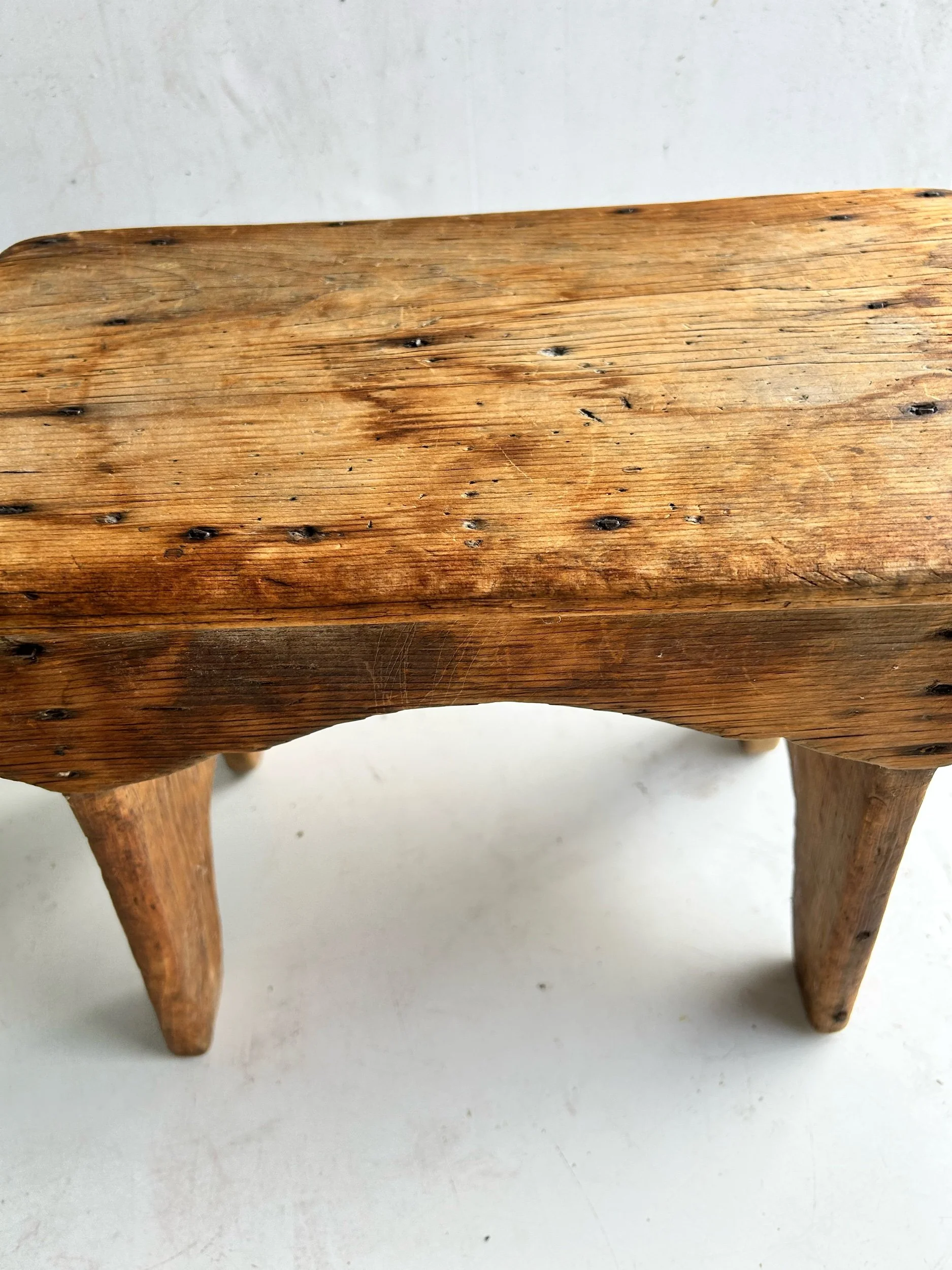 Image 2 of 6
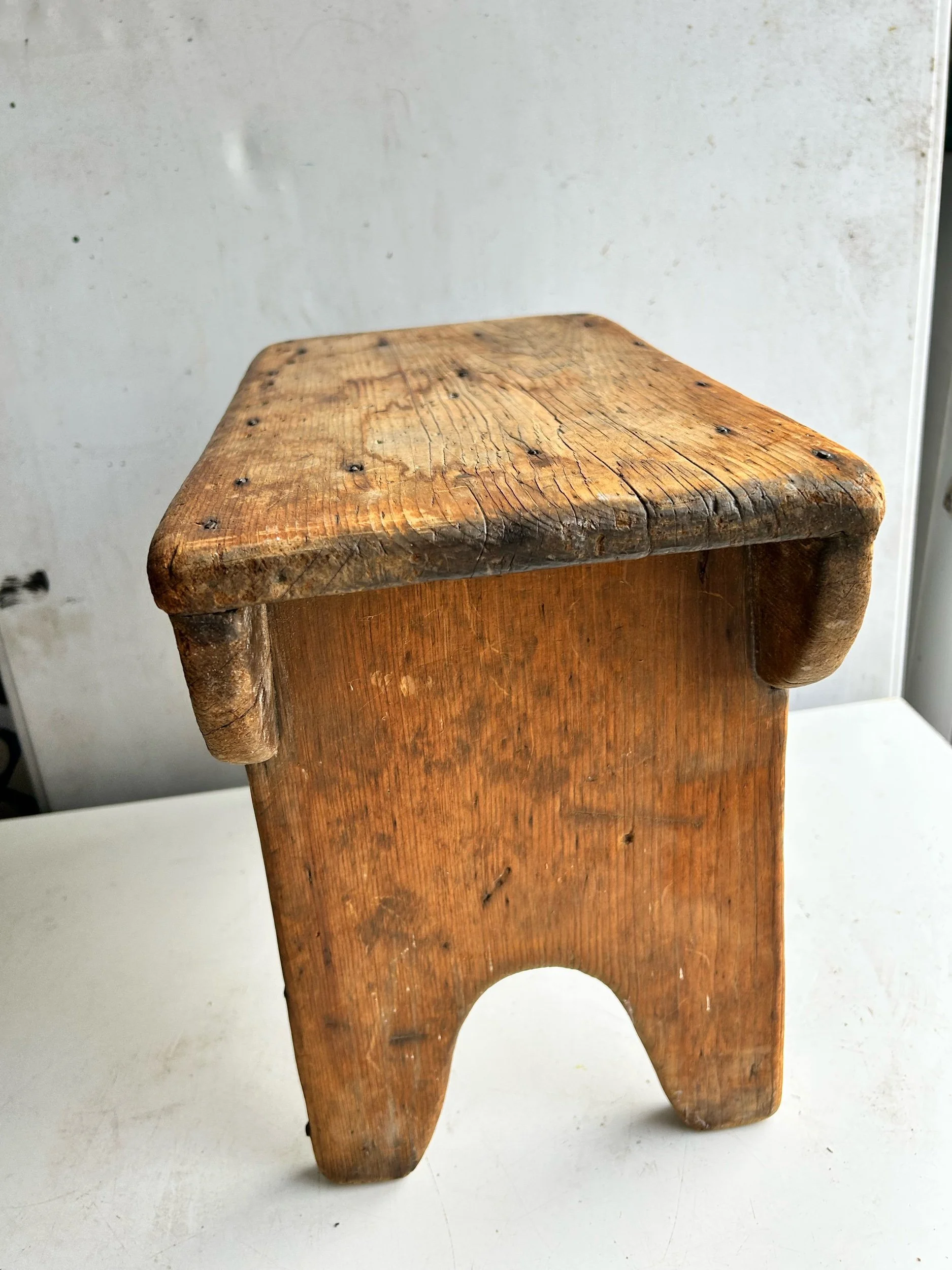 Image 3 of 6
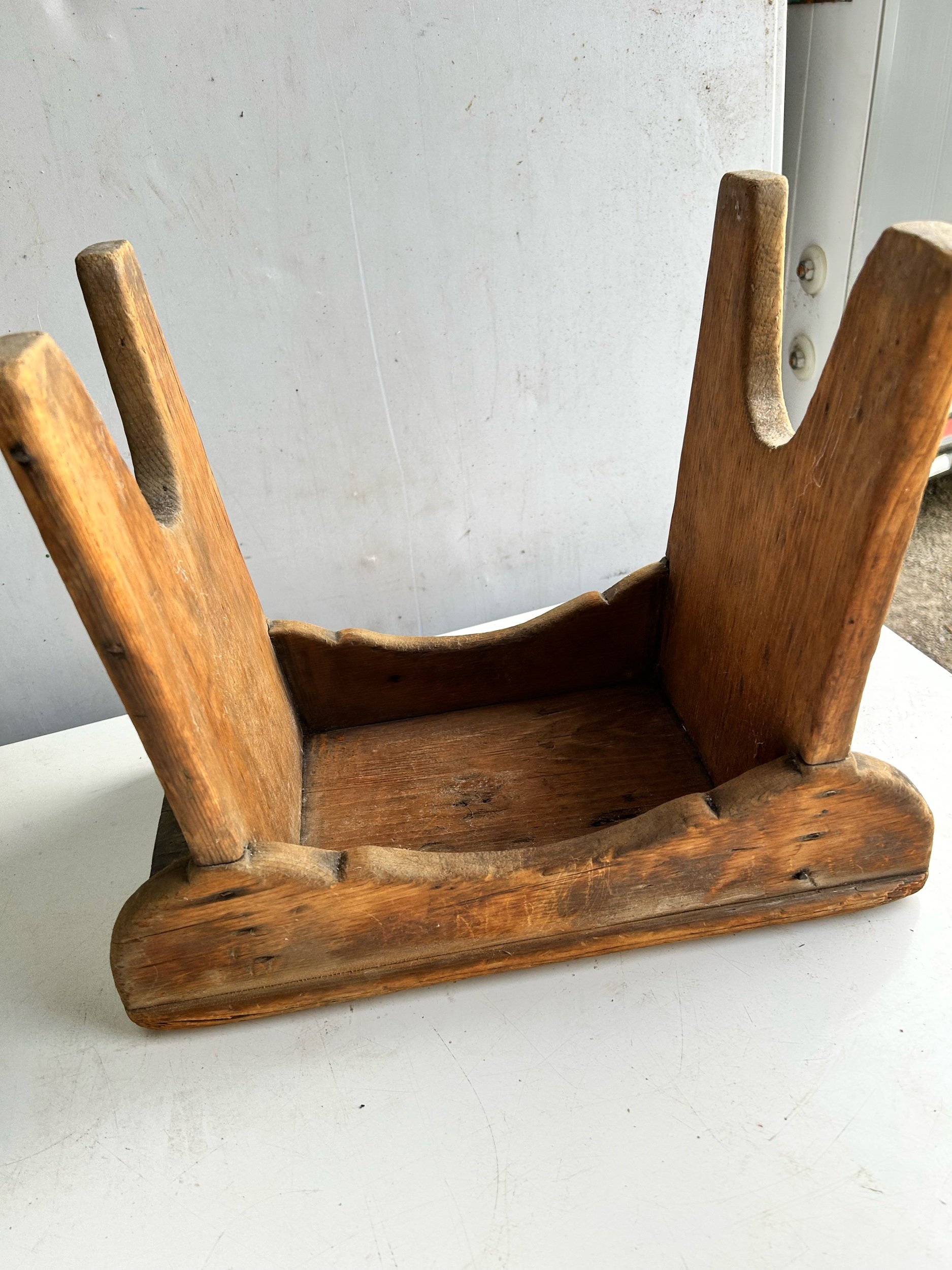 Image 4 of 6
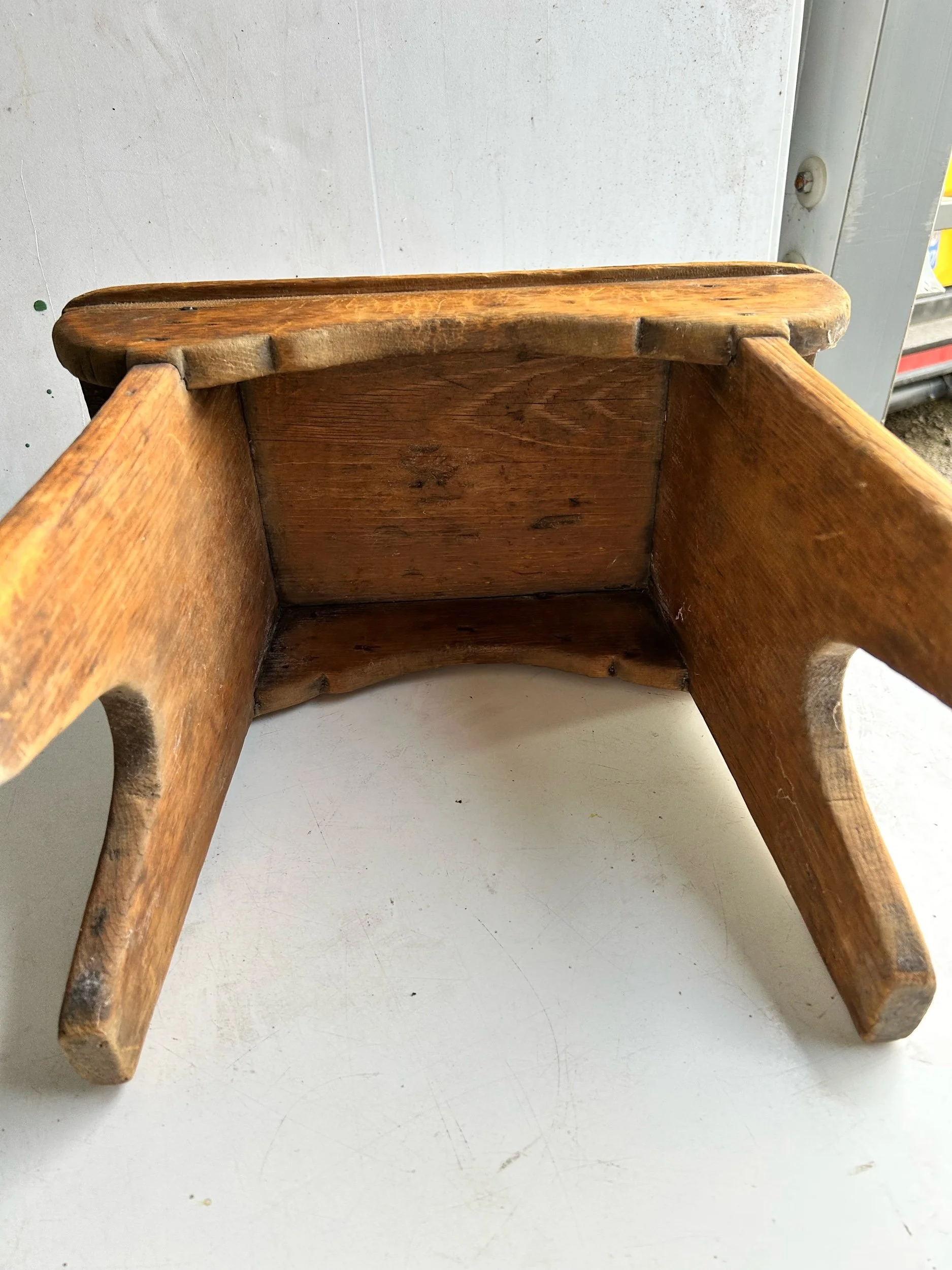 Image 5 of 6
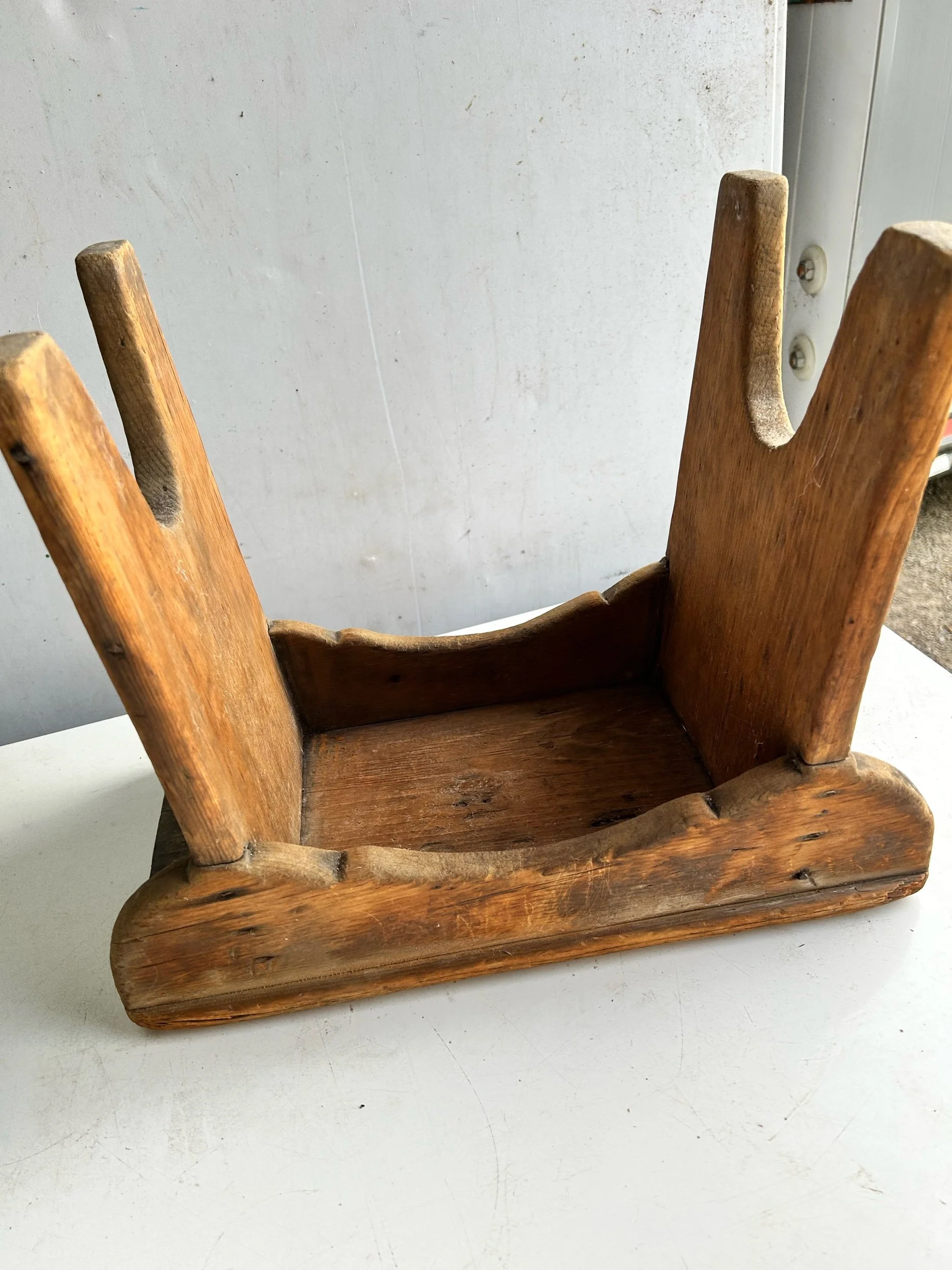 Image 6 of 6